

Witnessing the Ultimate River Crossings
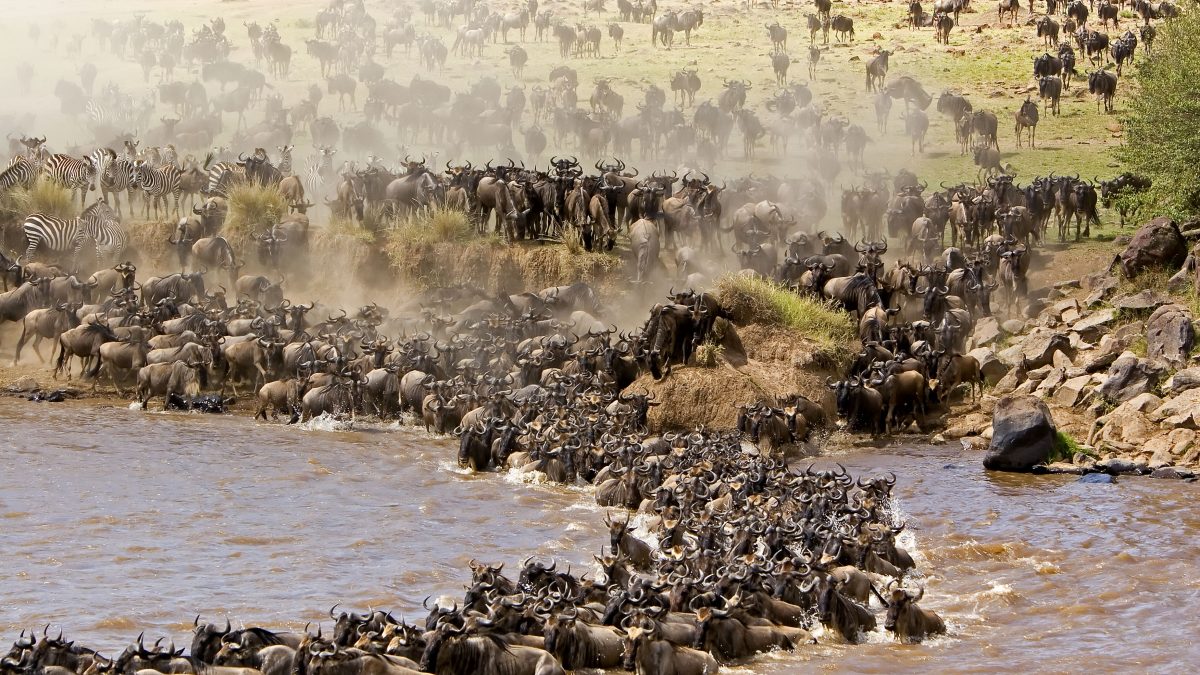
The Serengeti-Mara ecosystem hosts the most dramatic wildlife spectacle on the planet, and consulting a 2026 Great Migration Calendar is the first step toward experiencing it. In 2026, nearly two million wildebeest, zebras, and gazelles will once again embark on their circular pilgrimage through Tanzania and Kenya. While the herds are visible year-round, the “Holy Grail” for any traveler is witnessing the frantic, high-stakes river crossings. These moments, where survival hangs by a thread against crocodile-infested waters, define the raw power of the African wild.
Choosing the right time for your journey requires an understanding of seasonal rainfall and herd movement. Because the migration is a fluid, living event, timing your visit perfectly involves both expert planning and a bit of luck. However, by following our refined schedule, you can significantly increase your chances of seeing the dust rise and the first brave wildebeest take the plunge.
2026 Great Migration Calendar
The Seasonal Rhythm of the Herds
The migration is not a single event but a year-long cycle of life and survival. To help you plan your journey, we have broken down the primary phases of the movement. Specifically, the river crossings occur during two specific windows: the Grumeti crossings in the west and the iconic Mara crossings in the north.
January – March: The Calving Season
The year begins in the southern Serengeti and the Ndutu Plains. Over 500,000 calves are born within a few weeks, providing an easy target for lions and cheetahs. As a result, this is the “predator season,” offering high-action photography opportunities on the lush, short-grass plains. Furthermore, the short-grass environment provides excellent visibility for spotting elusive servals and caracals. During this time, the weather remains mostly dry and hot, making it ideal for mobile tented camps.
April – June: The Trek Northward
As the southern plains dry out, the herds begin their journey toward the Western Corridor. This period coincides with the “long rains,” turning the landscape emerald green. By June, the vanguard reaches the Grumeti River. In particular, the tall grasses of the Western Corridor provide cover for massive Nile crocodiles waiting in the shallows. While these crossings are smaller than the Mara, they offer a more private experience with fewer vehicles. Consequently, travelers enjoy more intimate sightings of the huge “mega-herds” moving through the woodlands.
July – October: The High-Drama River Crossings
This is the peak of the 2026 great migration calendar. The herds arrive at the northern Serengeti and the Masai Mara to face the treacherous Mara River. Consequently, between August and September, the pressure of the herds on the banks leads to the legendary “mega-crossings” that travelers dream of witnessing. Moreover, the weather stays cool and crisp, providing comfortable conditions for full-day game drives. Many travelers choose to stay in the Kogatende region to stay close to the primary crossing points.
November – December: The Return South
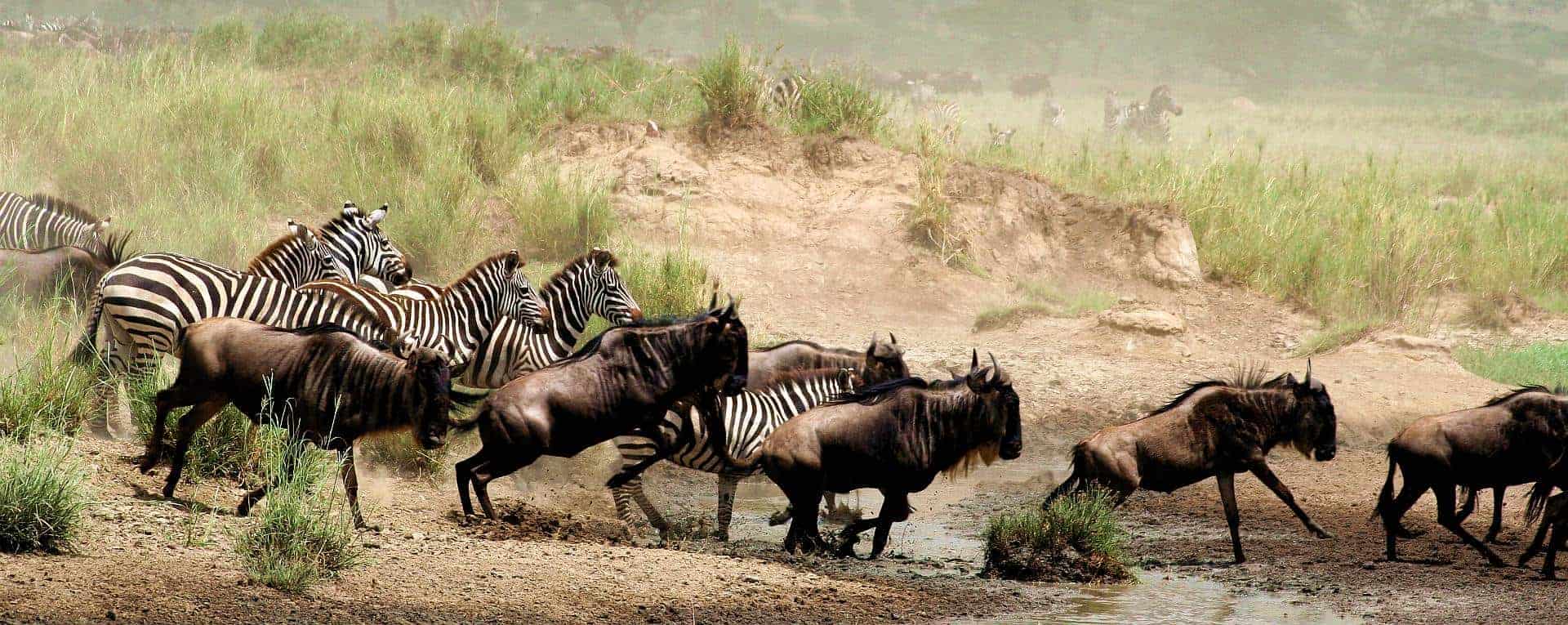
With the onset of the “short rains,” the herds sense fresh grass growing in the south. They begin a rapid trek back through the eastern Serengeti and the Loliondo Game Controlled Area. Ultimately, by late December, they reach the southern plains again, and the cycle resets. Interestingly, the movement during this phase is much faster as the wildebeest follow the scent of the rain. Travelers during this window can witness dramatic thunderstorms over the savannah, which create stunning backdrops for sunset photography.
2026 Migration Event Table
Refer to the table below for the best locations and expected activities throughout 2026.
| Month | Region | Key Wildlife Highlight | Crossing Probability |
| Jan – Feb | Southern Serengeti (Ndutu) | Peak Calving & Big Cat Action | Low |
| March – May | Central Serengeti | Massive Herds & Green Scenery | Low |
| June | Western Corridor | Grumeti River Crossings | Moderate |
| July | Northern Serengeti | Arrival at Mara River | High |
| August | Northern Serengeti / Mara | Peak Mara River Crossings | Very High |
| September | Masai Mara / Northern Serengeti | Continued River Action | Very High |
| October | Northern Serengeti | Return South Crossings | Moderate |
| Nov – Dec | Eastern & Central Serengeti | Rapid Movement South | Low |
How to Witness a Crossing: Insider Tips
Seeing a river crossing is an exercise in patience and a key highlight of any 2026 Great Migration Calendar itinerary. Furthermore, it requires an experienced guide who understands animal behavior. To clarify, here are the specific signs our guides look for before the action begins:
-
Massing on the Banks: The wildebeest gather by the thousands, creating a “black carpet” on the riverbank. The tension builds until a single “leader” finally decides to jump.
-
Nervous Pacing: If the herds run back and forth along the ridge, they are searching for a safe entry point with shallower water or fewer crocodiles. Consequently, our guides position the vehicles to give you a front-row seat without spooking the herd.
-
The Wind Factor: Wildebeest have an incredible sense of smell. If the wind blows the scent of fresh grass from the opposite bank, their desperation to cross increases.
-
The Follow-the-Leader Effect: Once the first animal leaps, the rest follow in a chaotic rush. In essence, a crossing can last from ten minutes to two hours, providing ample time for photography.
Your Migration Safari Packing List
The migration regions are dusty and hot during the day, yet surprisingly cold at night. Therefore, we recommend packing the following essentials:
-
High-Quality Binoculars: You will often watch from a distance to avoid spooking the herds. An 8×42 pair is ideal.
-
Neutral-Colored Clothing: Stick to khaki, tan, and olive green. Note that dark blue and black attract tsetse flies.
-
A Dust-Proof Camera Bag: The Serengeti is incredibly dusty in August. Keep your gear covered to protect lenses.
-
Layered Apparel: Mornings are freezing in open vehicles. Pack a fleece or a light down jacket for early starts.
-
Wide-Brimmed Hat & Sunscreen: The equatorial sun is intense. Similarly, lip balm with SPF is a must-have for the dry wind.
2026 Great Migration Calendar
Final Thoughts from Jackal Adventures
At Jackal Adventures, we know that the 2026 Great Migration Calendar is an invitation to witness the pulse of the African continent. No two migrations are the same, and the unpredictability is exactly what makes the experience so rewarding. Whether you catch a massive crossing or witness a pride of lions stalking the herds, the scale of this journey will leave you breathless.
We specialize in “herd-chasing” logistics, ensuring your camp is always positioned in the heart of the action based on the latest seasonal shifts. In short, we do the hard work of tracking so you can focus on the wonder of the wild. Africa is the cradle of humanity, and there is no better way to reconnect with nature than following this ancient rhythm. Let us help you plan the journey of a lifetime.
