

Photographing Mabamba’s Shoebill
The Shoebill Stork is more than just a bird; it is a living relic, a prehistoric silhouette that seems to have stepped directly out of the Cretaceous period and into the papyrus reeds of Uganda. For photographers, Mabamba Swamp, a RAMSAR site on the edge of Lake Victoria, is the premier theater for capturing this “Blue Ghost.” However, the harsh African sun is often a photographer’s greatest adversary. In the high contrast light of midday, the Shoebill’s sunken eyes disappear into deep shadows, and the subtle, slate-blue gradients of its plumage become washed out.
To capture the definitive Shoebill portrait, you must master the art of the low-light hunt. Working with Jackal Adventures, seasoned experts in navigating these labyrinthine waterways, ensures you are positioned in the right place at the precise moment the light turns cinematic.
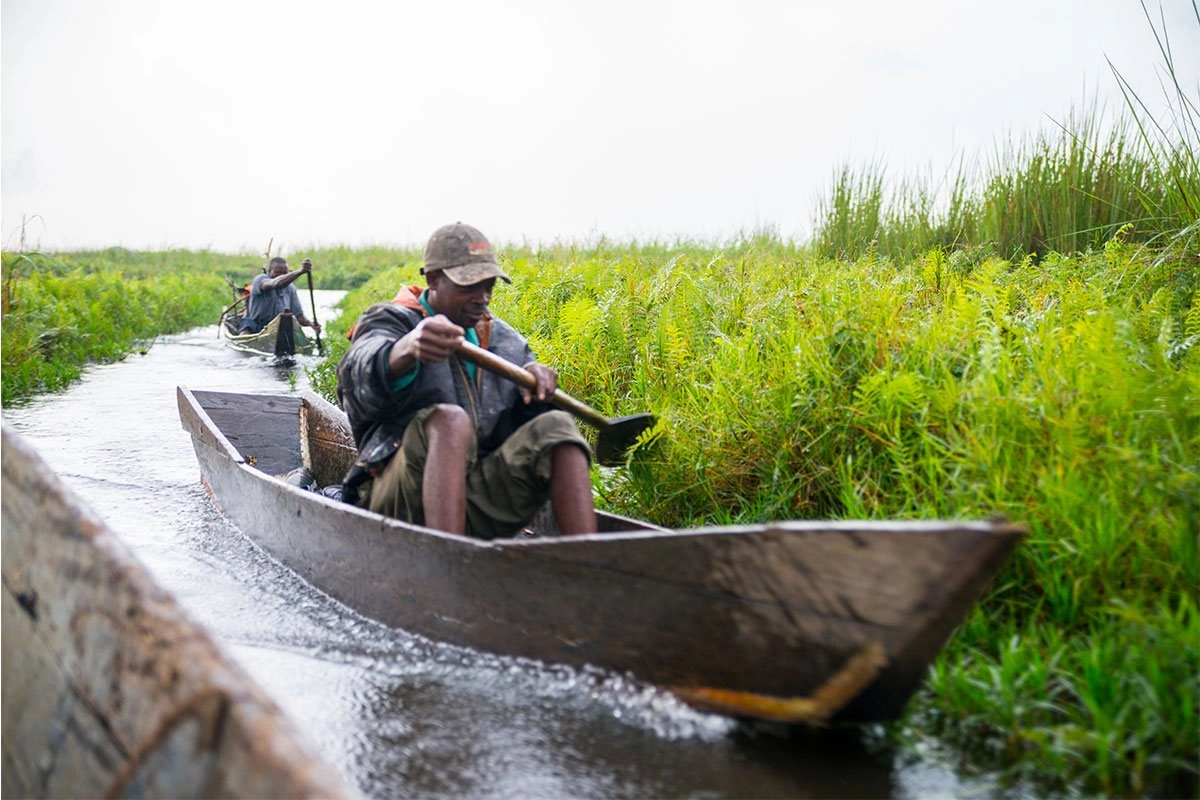
Mabamba Swamp
The Philosophy of Low Light Wildlife Photography
Photographing a Shoebill without the sun isn’t just about avoiding a tan; it’s about color science and texture. The Shoebill possesses a unique feather structure that reflects light in a way few other birds do. Under direct sunlight, the powder down feathers that the bird crushes to waterproof its body create a chalky, overexposed sheen.
When you remove the sun from the equation, the camera sensor can finally see the intricate charcoal ribbing on the primary feathers and the soft, lavender hues around the neck. This is why professional expeditions led by Jackal Adventures emphasize the edges of the day. In the soft light of dawn or under the heavy blanket of a storm cloud, the Shoebill’s prehistoric features are rendered with a three-dimensional depth that direct light simply flattens.
Timing Your Expedition
In the tropics, the sun rises with an aggressive intensity. By 10:00 AM, the photographic window for soft light usually slams shut. To get the shot, you need to be on the water while the rest of the world is still brewing coffee.
1. The Pre-Dawn Push (6:15 AM – 8:30 AM)
This is the holy grail for Shoebill photography. At dawn, Mabamba is often blanketed in a soft, ethereal mist rising from the cooling waters of Lake Victoria. This mist acts as a natural, massive softbox, diffusing the light and saturating the deep greens of the papyrus.
During these hours, Shoebills are most active. They stand statuesque, hunting lungfish in the shallow channels. Because the light is directional and low, you can capture the catchlight in their piercing yellow eyes without the brow ridge casting a heavy shadow. Jackal Adventures typically recommends a 6:00 AM departure from Entebbe to ensure you are the first boat in the channels. Being first doesn’t just mean you get the best spot; it means you get the calmest water, allowing for perfect reflections of the bird in the lily-choked channels.
2. The Overcast Advantage
While many tourists pray for clear blue skies, professional photographers should hope for a bright overcast day. A high, thin layer of cloud is a gift from the heavens. It allows you to photograph throughout the day without the raccoon eye effect caused by top-down sunlight. Under a gray sky, the swamp becomes a studio. The lack of harsh shadows means you can photograph the bird from any angle, rather than being restricted to having the sun at your back.
3. The Late Afternoon Glow (4:30 PM – 6:30 PM)
As the sun begins to dip toward the horizon, the light softens once more. This Golden Hour provides a warm, side-lit glow. However, if the clouds move in, you get a Blue Hour effect that perfectly complements the bird’s natural palette. If the bird decides to take flight, a rare and majestic sight, the low-angle light will illuminate the underside of its massive 8-foot wingspan, a shot that is nearly impossible to get during the high noon heat when the under wings are cast in total darkness.
Settings for the Sunless Swamp
When the sun is absent, your technical settings must adapt to the lower shutter speeds. The Shoebill is famously still, often remaining motionless for 30 minutes at a time. This is a massive advantage for the low-light photographer.
- Aperture: Aim for wide apertures like f/4 or f/5.6. This serves two purposes: it lets in more of that precious dim light and creates a “bokeh” effect that isolates the bird from the distracting, cluttered papyrus background.
- ISO Management: Don’t be afraid to push your ISO to 800, 1600, or even 3200 if you have a modern full-frame sensor. Noise reduction software in post-processing is incredibly effective today, but nothing can fix a blurry eye caused by a shutter speed that was too slow for the swaying of the boat.
- Shutter Speed: Since you are in a boat, you have to compensate for the water’s movement. Even if the bird is still, you are not. Keep your shutter speed at least $1/500$ of a second unless you are using a stabilized lens and have very steady hands.
Lighting Conditions at Mabamba
| Lighting Condition | Best For… | Challenges | Recommended Gear |
| Pre-Dawn Mist | Atmospheric, moody, Jurassic vibe | Extreme low light, dampness | 400mm $f/2.8$ Prime |
| Bright Overcast | High-detail feather textures | Flat colors (easily fixed in post) | 200-600mm Zoom |
| Stormy Sky | Dramatic, dark backgrounds | High risk of rain for gear | Rain Cover / Sleeve |
| Late Dusk | Silhouettes against water | Focus hunting in low contrast | Fast Auto-focus Body |
Why Jackal Adventures is Essential
Navigating Mabamba is not as simple as renting a boat and rowing out. The swamp is a shifting puzzle of islands of vegetation that move with the wind. The guides at Jackal Adventures understand the needs of a photographer. They don’t just find the bird; they understand how to position the canoe relative to the light source. Even on a cloudy day, there is a direction to the light. A Jackal Adventures guide will silently pole the canoe into a position that gives you the best background, avoiding messy sticks or bright hot spots in the distance, ensuring that the Shoebill remains the undisputed star of the frame.
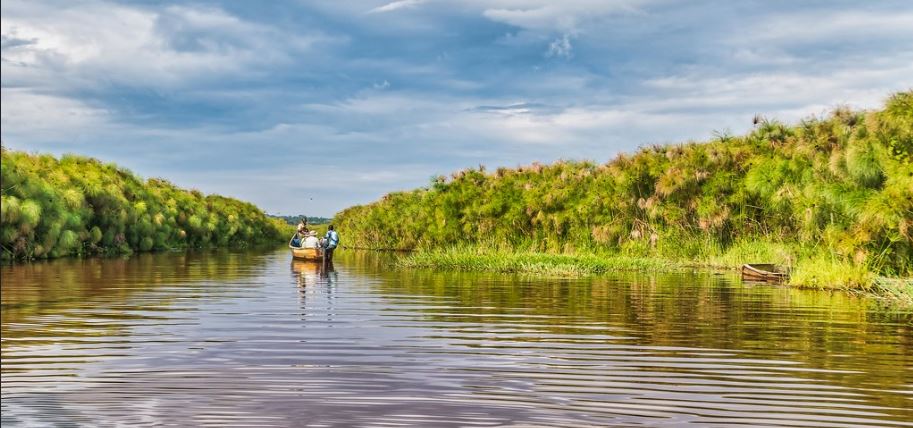
Mabamba Swamp
The Ethical Shot
Photographing without the sun often requires getting a bit closer to see the details. Jackal Adventures adheres to strict ethical guidelines to ensure the birds are not stressed. By arriving early when the temperature is cool, the birds are generally more relaxed and less likely to fly away from the boat. This patience allows the photographer to witness genuine behaviors, such as preening, yawning, or the violent bill-clattering display, rather than just a bird in flight because it was startled.
Final Gear Checklist for the Sunless Hunt
- Beanbag or Monopod: Tripods are useless in a narrow wooden canoe. A beanbag draped over the side of the boat is the best stabilizer for long lenses.
- Rain Protection: If you are hunting for overcast light, a sudden tropical drizzle is always a possibility. A simple plastic “sleeve” for your camera can save a $5,000 setup.
- Lens Choice: A 400mm to 600mm focal length is the sweet spot. You want enough reach to fill the frame without needing to crowd the bird’s personal space.
- Spare Batteries: Cold, damp mornings can drain battery life faster than a sunny afternoon.
The Shoebill is a patient hunter, a master of waiting for the perfect millisecond to strike its prey. To photograph it successfully, you must adopt that same patience. Arriving before the sun and working with the professional team at Jackal Adventures ensures that when that prehistoric beak finally opens, you have the soft, perfect light required to immortalize the moment.
