

Best Ways to Get from Kampala to Kigali in 2026
The journey from Kampala to Kigali represents one of East Africa’s most vital and scenic corridors. This route connects two bustling capitals, winding through the lush, emerald hills of southwestern Uganda before descending into the remarkably clean, structured landscape of Rwanda. In 2026, traveling between these two cities is more seamless than ever, offering a choice between rugged, intimate road travel and high-speed, efficient air transfers. Whether you are a business traveler, a backpacker, or a luxury safari-goer, understanding the logistics of this route is the key to a successful crossing.
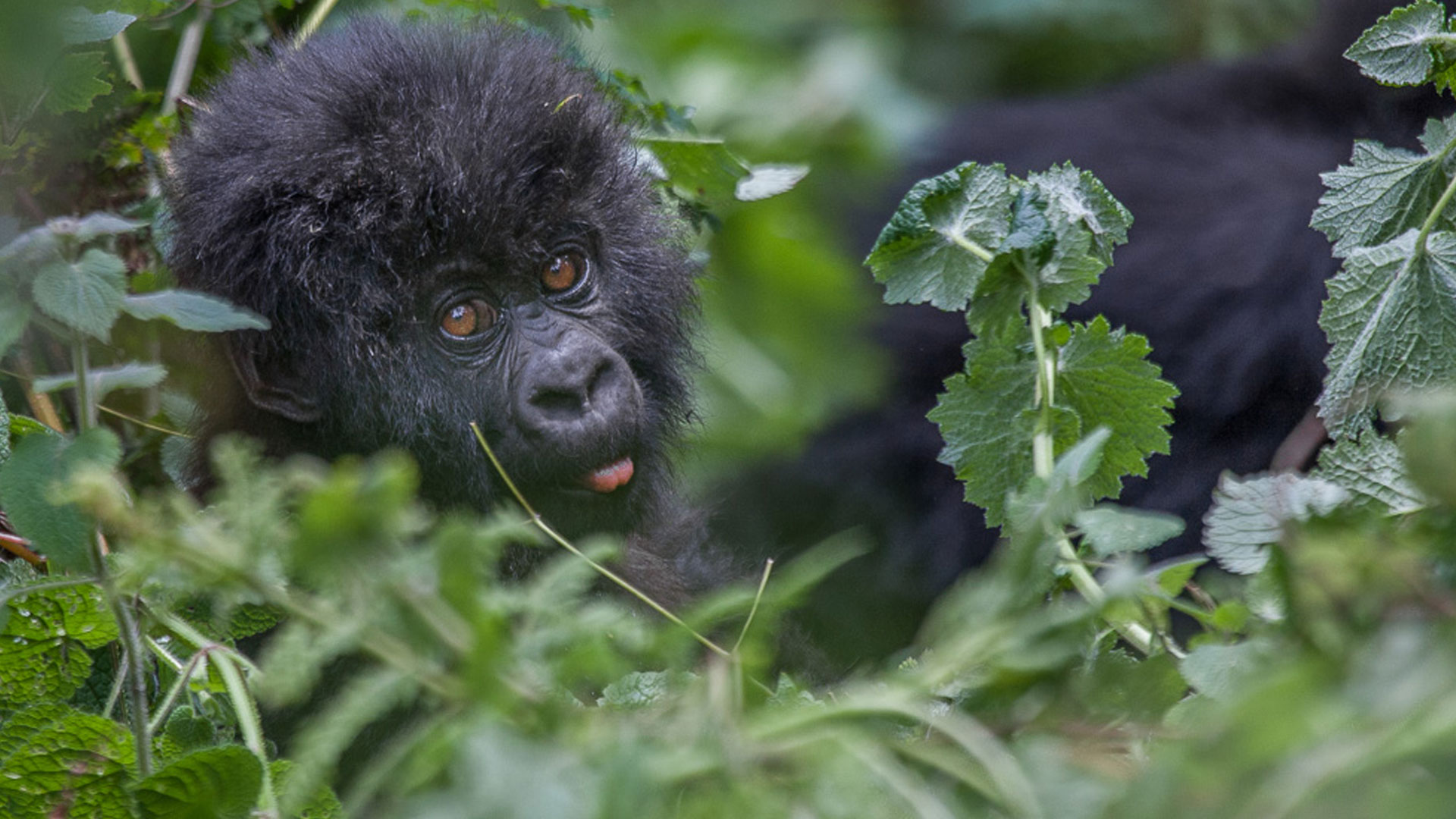
Kampala to Kigali
The Road vs. Air Decision: A Strategic Choice
Choosing how to travel from Kampala to Kigali depends entirely on your priorities. The 500-kilometer road journey is an adventure in itself, typically taking between 8 and 10 hours depending on border traffic. For those with limited time, a direct flight from Entebbe to Kigali slashes travel time to just one hour.
At Jackal Adventures, we view logistics as an art form. Every transfer presents an opportunity to witness a transition in ecology, culture, and climate. While flying saves time, driving offers a window into the soul of the region. Below, we explore the mechanics of moving through one of the most beautiful regions on Earth using modern standards.
1. Traveling by Road: The Scenic Route
For many, the defining memory of East Africa is the transition of its landscapes. The drive southwest from Kampala takes you through Masaka, Mbarara, and Kabale. This route offers dramatic views of the rolling Kigezi highlands, often called the “Switzerland of Africa,” before you reach the border.
The Public Bus Experience
This is the most budget-friendly option, with several established companies operating daily. Buses usually depart in the early morning (between 4:00 AM and 7:00 AM) or late evening (between 8:00 PM and 10:00 PM) from terminals in Kampala, such as the Namayiba Bus Terminal.
-
2026 Operators: Companies like Trinity Express, Jaguar Executive Coaches, and Volcano Express remain reliable choices. These carriers have modernized their fleets to meet 2026 standards, featuring more reliable engines and improved safety protocols.
-
Cost & Comfort: Fares generally range from $15 USD to $30 USD for standard or VIP seating. Modern executive buses offer reclining seats, charging ports, and air conditioning. However, be prepared for “African time”; while departures are mostly prompt, road conditions or traffic can add unforeseen hours to the trip.
Private 4×4 Transfer
Hiring a private vehicle with a professional driver-guide offers the ultimate flexibility. It allows you to set your own pace, stop for photographs at the Equator crossing, and enjoy a much higher level of comfort.
The Jackal Adventures Advantage: We utilize rigorously maintained 4×4 Land Cruisers for these long-distance transfers. This is the ideal option if you are combining your transit with a gorilla trekking safari in Bwindi before crossing into Rwanda. Our drivers are trained in defensive driving and possess intimate knowledge of the best local stops for clean facilities and high-quality meals.
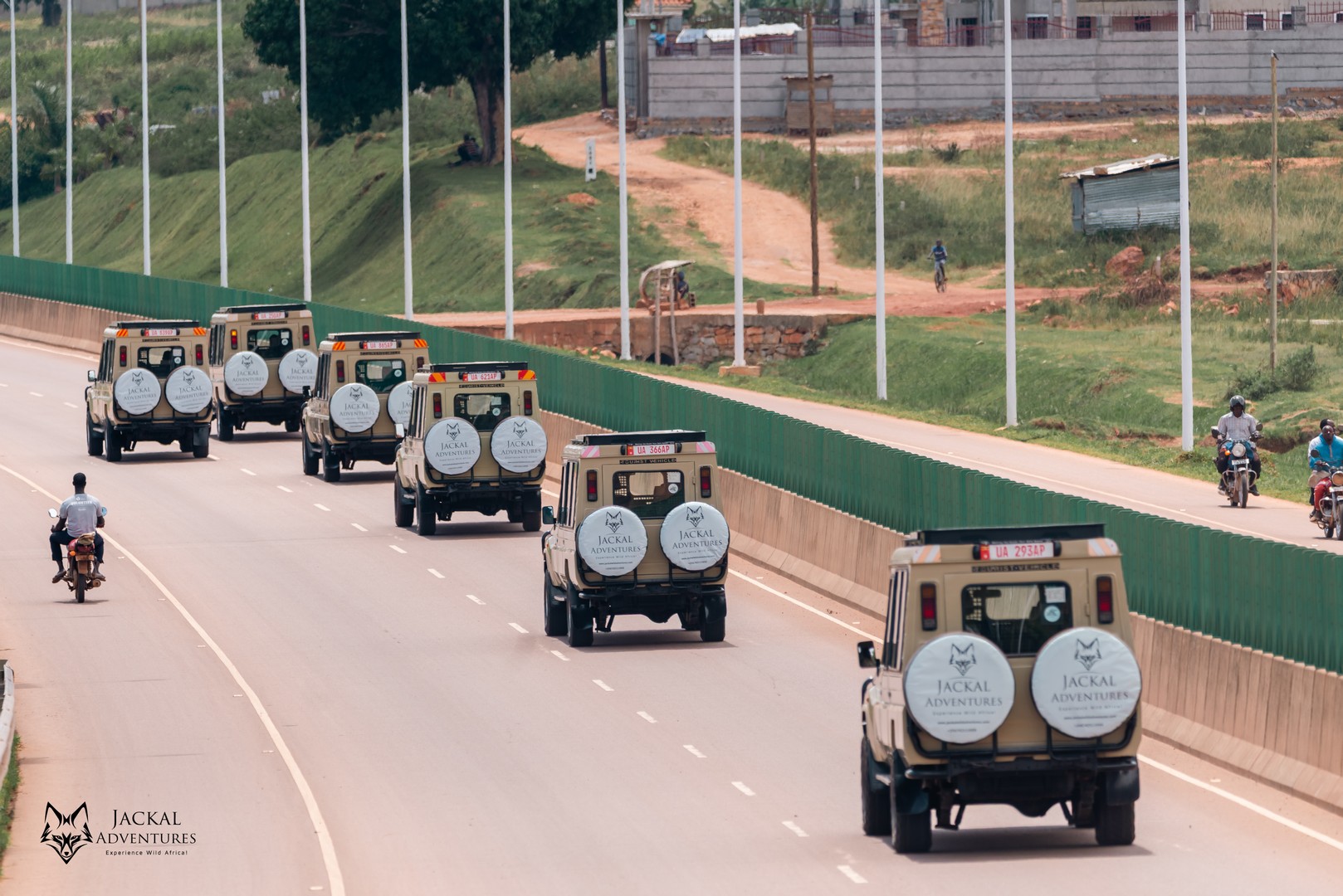
Kampala to Kigali
2. Traveling by Air: The Fast Track
If you prefer to skip the long drive, flying is the most efficient method. Flights depart from Entebbe International Airport (EBB) and land at Kigali International Airport (KGL). In 2026, scheduled flights are frequent, often averaging five daily departures. Nonstop flight time is approximately 50 to 60 minutes.
-
Airlines: RwandAir and Uganda Airlines operate the majority of these direct regional flights. Both airlines have expanded their regional networks, offering competitive pricing and reliable schedules.
-
Cost: One-way tickets typically range from $150 USD to $250 USD, depending on seasonality and how early you book. Remember to factor in the 1-hour travel time from Kampala to Entebbe Airport and the recommended 2-hour check-in window.
3. Navigating the Border Crossing: Gatuna vs. Cyanika
The land border crossing is a critical component of the Kampala to Kigali road journey. There are two primary border posts used by travelers, each offering a different logistical experience.
Gatuna/Katuna Border
This is the most direct and commonly used border on the main highway between the two capitals. It handles the majority of public bus traffic and commercial cargo. In recent years, the infrastructure at Gatuna has seen massive upgrades, including one-stop border posts that allow travelers to clear both Ugandan and Rwandan customs in a single building. This has significantly reduced the time spent standing in queues.
Cyanika Border
Located further west near Kisoro (Uganda) and Ruhengeri (Rwanda), this crossing is significantly more scenic but takes longer if you are heading straight to Kigali. It is the preferred choice for tourists linking gorilla trekking in Uganda’s Bwindi Impenetrable Forest with Volcanoes National Park in Rwanda. The road winding toward Cyanika offers breathtaking views of the Virunga Volcanoes, making it a favorite for photographers.
4. The “Vehicle Swap” and Regional Licensing
For those on a multi-country safari, it is vital to understand the “Vehicle Swap” protocol. Due to regional licensing laws and insurance complexities, many Ugandan safari vehicles are restricted from operating as commercial transport once they cross into Rwanda, and vice versa.
At Jackal Adventures, we handle this seamlessly. You arrive at the border in a comfortable Ugandan vehicle, walk through immigration with our assistance, and find a Rwandan-registered vehicle and guide waiting on the other side. This ensures that you always have a local expert who knows the specific terrain and traffic laws of their home country, providing a safer and more informative journey.
5. Essential Documentation and Visas for 2026
Smooth movement between Uganda and Rwanda requires proper paperwork. Always ensure your documents are in order before departing Kampala for Kigali.
The East Africa Tourist Visa
To simplify your experience, we recommend the East Africa Tourist Visa. This $100 USD permit allows for multiple entries between Kenya, Rwanda, and Uganda for 90 days. It is a cost-effective solution compared to buying three separate visas. You must apply for this through the consulate of the country that serves as your first point of entry.
Passport and Health Requirements
-
Passport Validity: Your passport must be valid for at least six months beyond your intended stay and contain at least two blank pages.
-
Yellow Fever Certificate: This is strictly required. Immigration officers at both airports and land borders will check for physical or digital proof of this vaccination.
-
Digital Arrival Forms: By 2026, Rwanda will have moved almost entirely to digital passenger locator forms. Ensure you have completed any required online health or entry declarations at least 24 hours before you reach the border.
2026 Transport Comparison: Kampala to Kigali
| Feature | Scheduled Bush Flight | Luxury Public Bus | Private 4×4 Transfer |
| Duration | 1 Hour (plus airport time) | 8 – 10 Hours | 8 – 9 Hours |
| Comfort Level | High (Fast & scenic) | Moderate (Reclining seats) | Elite (Private & spacious) |
| Border Process | Airport Immigration | Group Clearance (Katuna) | Private Escort (Cyanika/Katuna) |
| Best For | Business & Time-Poor | Budget & Solo Travelers | Families & Safari-Goers |
| Scenery | Aerial views of Virungas | Highway & Town Life | Customizable photo stops |
Key Insights for Your 2026 Choice
-
The “Entebbe Factor”: If you choose to fly, remember that Entebbe International Airport is roughly 40km from Kampala city. Depending on traffic, the road transfer to the airport can take up to two hours.
-
The Border Experience: Public buses generally use the Katuna (Gatuna) border, which can be busy with commercial cargo. A private 4×4 allows you to use the Cyanika border, which is often quieter and much more scenic, especially as you approach the volcanoes.
-
The One-Stop Advantage: By 2026, both the Katuna and Cyanika borders have fully implemented One-Stop Border Post (OSBP) systems. This means you only stop once to clear both Ugandan and Rwandan immigration, significantly cutting down on transit time.
6. Safety and Travel Tips for 2026
Traveling between these two nations is generally very safe, but being prepared makes the experience more enjoyable.
-
Currency: While US Dollars (printed after 2013) are widely accepted for large payments, carry Ugandan Shillings (UGX) for the first half of the trip and Rwandan Francs (RWF) for the second. Money changers exist at the borders, but using an official bank or ATM in the city is safer.
-
Plastic Bags: Remember that Rwanda has a strict ban on non-biodegradable plastic bags. They will be confiscated at the border or the airport. Use reusable fabric bags or “bags for life” instead.
-
Connectivity: If you are driving, consider getting a roaming data plan. While both countries have good 4G and 5G coverage in urban areas, there are “dead zones” in the mountainous regions near the border.
Conclusion: Why Logistics Matter
Mastering the journey from Kampala to Kigali requires more than just a ticket; it requires a logistics partner who anticipates every border delay and road condition. At Jackal Adventures, we treat every mile of your journey with respect. Whether you choose the rugged beauty of the road or the swift efficiency of a flight, we bridge the distance with elegance and safety.
From the rolling hills of Mbarara to the clean streets of Kigali, trust us to be your compass in the wild. We ensure that your transition between these two East African gems is as memorable as the destinations themselves.
