

Climbing the Rwenzori Mountains: From Rainforest to Glaciers
February 4, 2026
Wildlife Photography in Uganda: Capturing the Pearl of Africa
February 4, 2026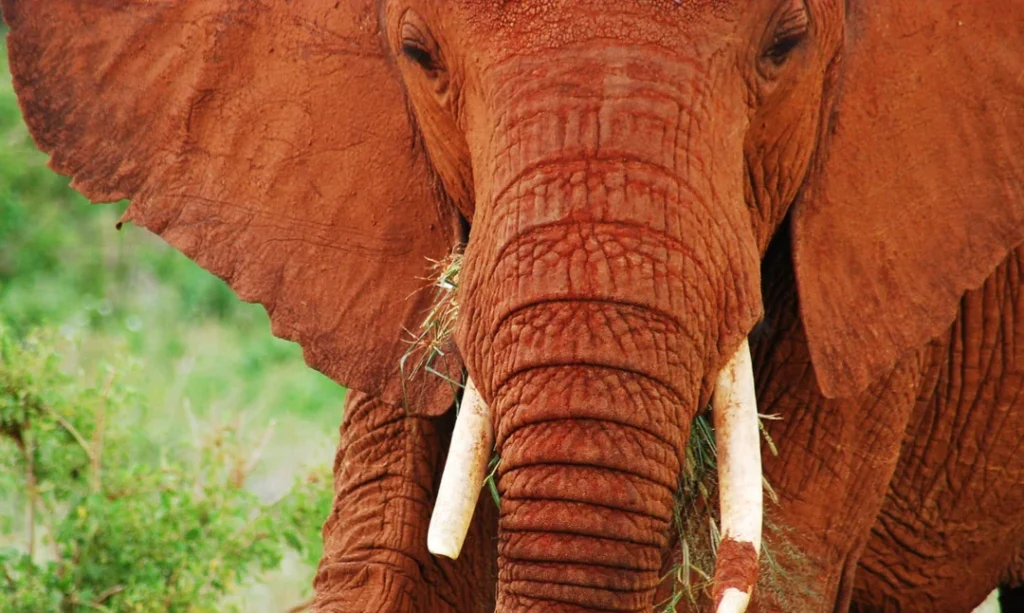
Kenya’s red elephants of Tsavo
Kenya’s red elephants of Tsavo aren’t a distinct subspecies; they are a living testament to the unique geology of Kenya’s largest protected area. In most parts of Africa, elephants are a familiar, dusty slate-grey. But in the vast, semi-arid plains of Tsavo National Park, the giants are a striking, burnt ochre.
The Science Behind the Colour.
The secret to the elephants’ vibrant hue lies beneath their feet. Tsavo is famous for its laterite soil, a soil type rich in iron and aluminium oxides. This earth is intensely red, fine-grained, and incredibly persistent. So, why do the elephants cover themselves in it? It isn’t for vanity. For an elephant, a “dust bath” is a vital part of daily hygiene and temperature regulation:
- Sun Protection: An elephant’s skin, while thick, is surprisingly sensitive to UV rays. A thick coating of red dust acts as a natural sunscreen.
- Parasite Control: The fine dust clogs the breathing pores of ticks, lice, and biting flies that try to hide in the folds of the elephant’s skin.
- Cooling Down: After a swim in a watering hole, elephants will immediately spray themselves with red mud or dust. As the moisture evaporates from the mud, it keeps their body temperature down in the scorching Kenyan sun.
When you see a “Red Elephant,” you are essentially looking at an animal that its own environment has masterfully painted. When they migrate to areas with different soil or go a long time without a dust bath, they eventually fade back to their natural grey.

Majestic red elephant of Tsavo East
Where to Find the Biggest Herds
- The Galana River (Tsavo East). Tsavo East is generally flatter and drier than the West, making wildlife easier to spot. The Galana River is the lifeblood of this park. During the dry season, massive herds congregate along the riverbanks. Watching a herd of fifty red elephants crossing the blue waters of the Galana is one of the most cinematic sights in Africa.
- Mudanda Rock. This is a massive 1.5km long inselberg that creates a natural catchment area for water. Below the rock sits a large dam. During the heat of the day, hundreds of elephants descend upon this watering hole. The elevated position on the rock provides a “stadium view” of the red herds socialising and bathing.
- Aruba Dam, located in the heart of Tsavo East, attracts thousands of animals. Because the surrounding plains are wide open, the visibility here is unparalleled. It is arguably the best place in the world to photograph large groups of red elephants against a stark, minimalist background.
Map showing Tsavo National Park

Tsavo National Park map | Location of the Tsavo National Parks
The “Super Tuskers”
Tsavo is one of the last places on Earth where you can find Super Tuskers—bull elephants with tusks so long they literally touch the ground. Note: To be classified as a Super Tusker, each tusk must weigh more than 45 kg (100 lbs). As of early 2026, conservation groups like the Tsavo Trust monitor approximately 12 confirmed Super Tuskers and over 30 “emerging” tuskers (younger bulls with the genetic potential to reach that size). These giants are heavily protected to ensure their rare genes continue to be passed down through the population.
Tsavo East vs. Tsavo West
The Tsavo Conservation Area is split into two distinct parks by the Nairobi-Mombasa highway. While both house these “red giants,” the experience in each is quite different.
| Feature | Tsavo East | Tsavo West |
| Landscape | Flat, open savannah and semi-arid plains. | Rugged, volcanic hills and lush springs. |
| Visibility | Excellent; easy to spot large herds from a distance. | Challenging; thick vegetation hides wildlife. |
| Key Highlights | Yatta Plateau, Galana River, Aruba Dam. | Mzima Springs, Shetani Lava Flow, Rhino Sanctuary. |
| Elephant Sightings | Higher concentrations; famous for “Super Tuskers.” | Smaller herds are often seen around water holes. |
| Vibe | “The Theatre of the Wild”—raw and vast. | Scenic, dramatic, and more adventurous. |
Conservation and the Future
While the red elephants are a symbol of beauty, they are also a symbol of resilience. The Sheldrick Wildlife Trust operates extensively in Tsavo, rescuing orphans who have lost their families to poaching or drought. Visiting the park isn’t just about the photos; it’s about supporting the vast infrastructure required to protect these giants. The “Red Elephants” are a flagship species if they thrive, the entire ecosystem of Tsavo thrives with them.
Final Tips for Your Safari
Best Time to Visit: The dry seasons (June to October and January to February) are best for seeing large herds at watering holes, when wildlife activity concentrates around rivers and pans. For a well-paced, thoughtfully guided experience that embraces both the iconic moments and the unexpected ones, consider booking your trip with Jackal Adventures, whose deep knowledge of the landscape turns patience into unforgettable encounters.




1 Comment
[…] Elizabeth National Park. From there, you can cross into Kenya to explore Amboseli, Maasai Mara, and Tsavo National Parks. The journey often concludes in northern Tanzania, including the Serengeti and Ngorongoro Crater. […]